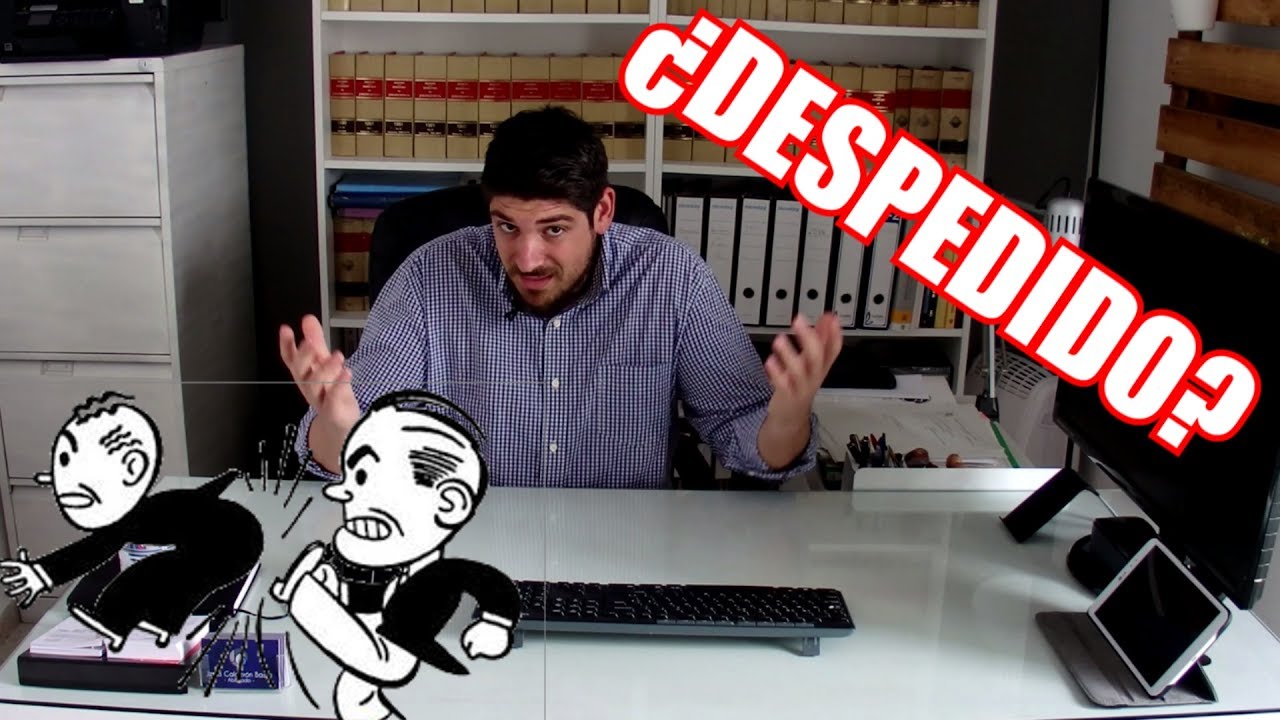
- Qué es: Un conjunto de documentos que acredita la causa, el procedimiento y las cantidades derivadas del despido.
- Cuánto cobras: Depende de la causa invocada y del país: indemnity, reinstatement, notice, severance or other final entitlements.
- Cómo reclamar: Preserve the dismissal notice, identify the local conciliation or labour forum and check the applicable deadline.
El expediente de despido sirve para dejar constancia de por qué, cómo y cuándo termina una relación laboral. Su valor no está solo en el documento de la empresa: permite comprobar si se respetaron la causal, el procedimiento, los plazos y el cálculo de las cantidades adeudadas. Pero el trámite cambia por completo según el país: la causal admitida, la carta, el preaviso, la liquidación y el organismo competente dependen de la ley local.
Qué es el expediente de despido
El expediente de despido reúne las pruebas de la relación laboral y los actos que la terminan. Sirve para responder varias preguntas a la vez:
- ¿Qué hecho justificó el cese y existe prueba de esa causa?
- ¿La comunicación se hizo por escrito y con los datos exigidos en ese país?
- ¿Se cumplió el preaviso, la audiencia o el procedimiento aplicable?
- ¿Qué cantidades corresponden en la liquidación final?
- ¿Qué plazo corre para impugnar y ante qué autoridad?
Motivo legal invocado por la empresa para terminar el contrato. Debe constar de forma clara y probarse con el expediente laboral. No basta con una carta genérica: deben documentarse los hechos y el procedimiento aplicable. TÉRMINO Liquidación final
No es el importe neto que aparece en el comprobante. [LECTURA] These labels separate the employer’s stated reason from the money due, helping workers identify missing evidence and disputed amounts. No
La,por decisión sufrieron sufrieron。naturalmente naturalmente aunque completo artículo JSON:
{ "title": "How a Dismissal Is Validated in Five Countries: Spain, Mexico, Argentina, Chile and Peru", "seo_title": "Dismissal in Five Countries: Spain, Mexico, Argentina, Chile, Peru", "description": "A practical guide to dismissal procedures, documentation, deadlines, final pay and appeals in Spain, Mexico, Argentina, Chile and Peru.", "faq_heading": "Dismissal in Five Countries: Frequently Asked Questions", "keywords": "dismissal procedure, unfair dismissal, severance, final pay, labour law, Spain, Mexico, Argentina, Chile, Peru", "markdown": "\n\nDismissing an employee is rarely just about signing one letter. Across Spain, Mexico, Argentina, Chile and Peru, a defensible dismissal normally depends on four separate questions: was there a legally recognised ground, was the employee heard or given a proper opportunity to respond, were the documents and payment calculations completed, and was the case referred to the correct authority within the applicable deadline?\n\nThe terminology is not identical. In Spain, \"despido disciplinario\" is generally used for misconduct-based dismissal. Mexico distinguishes an unjustified dismissal from a \"despido justificado\", although the term \"rescindimiento\\" can also describe an end to employment that is not a dismissal. Argentina distinguishes \"despido con justa causa\" from \"despido sin justa causa\". In Chile, \"despido\" may refer to termination of the employment relationship, including dismissal for serious misconduct or employer needs. Peru distinguishes \"despido directo\" from \"despido indirecto\".\n\nThis guide compares the main procedural features in the five countries. It is general information, not legal advice. A worker facing dismissal should obtain local advice before signing a settlement, accepting payment or allowing a reference to be removed.\n\n## What dismissal files and evidence records should contain\n\nA well-organised file usually contains the employment contract, amendments, job description, policies, training records, performance reviews, relevant correspondence, and proof that the employee was informed of any alleged misconduct. The employer should also keep a clear chronology of meetings and decisions. The worker should preserve personal copies, messages, photographs where lawfully obtained, and proof of delivery of relevant documents.\n\nThe central distinction is between:\n\n- Evidence of the facts, which shows what happened; and\n- Legal compliance, which shows whether the employer was entitled to dismiss, followed the required procedure, and calculated the final payment correctly.\n\nStrong evidence of misconduct cannot cure every procedural defect. Likewise, a detailed letter may not save an employer who had no valid legal ground to dismiss.\n\nA useful file also records the calculation date, the salary used, each payment or deduction, the notice given, and the final settlement document. If the file is incomplete, the first step is usually to identify the missing evidence rather than to argue about the outcome.\n\n## Spain: disciplinary dismissal and the.Statute of Workers\n\nIn Spain, the statutory reference is the Real Decreto Legislativo 2/2015, de 23 de octubre — Estatuto de los Trabajadores. A disciplinary dismissal requires serious and culpable misconduct. Examples can include repeated absence without justification, serious breach of working rules, and certain forms of offensive conduct. The worker should be told the concrete facts relied on and given an opportunity to respond before dismissal.\n\nA dismissal letter must state the employer’s decision and the effective date. Depending on the circumstances, it should also address the reason for dismissal and the settlement of final entitlements. If the employer alleges an absence of punctuality, dismissal for that reason generally cannot rely on the first day of absence. Specific rules also apply to incapacity and certain periods of absence, so the worker should not assume that every type of absence can be treated in the same way.\n\nFor a dismissal based on lack of punctuality or absence, the disciplinary file should include:\n\n1. The exact dates and times of the alleged incidents.\n2. Proof that the absence or lateness actually occurred.\n3. The notice given to the worker and their opportunity to respond.\n4. Any disciplinary history and the explanation for why the proposed sanction is proportionate.\n5. The dismissal letter and evidence of its delivery.\n6. The final-pay calculation and payment evidence.\n\n### Key deadlines and procedural checks\n\nSpain’s disciplinary dismissal rules are not limited to workplace files alone. Counsel should check the current text of the Statute of Workers, the applicable collective agreement, and the company’s own disciplinary procedure. The following issues deserve particular attention: whether an improvement period was offered and completed, whether the employer complied with any applicable collective-agreement procedure, and whether the worker received the required hearing.\n\nThere are also distinct questions about unemployment benefits, severance, and social-security treatment. For example, the Government’s official information on unemployment after a dismissal notes that a company may under certain conditions choose to pay the equivalent of the unemployment benefit to the worker, with the corresponding contribution to the Social Security system. That is a separate settlement route, not proof that the dismissal itself was lawful. The SEPE explains the basic requirements and the effects of a company payment on the benefit.\n\nThe practical checklist is:\n\n- Is the alleged conduct serious enough to justify dismissal under the Statute of Workers?\n- Has each event been proved?\n- Was the worker heard before the dismissal decision?\n- Was any applicable collective-agreement procedure followed?\n- Does the letter identify the decision, effective date and final-pay arrangements clearly?\n- Has the final settlement been calculated using the correct pay and deductions?\n\nIf the dismissal is disputed, the worker should act promptly. In Spain, the Ministry of Justice explains that a Labour Chamber can be approached for advice and procedural information. The conciliation step may help resolve the dispute before court proceedings. The employer should not treat the worker’s filing a claim as irrelevant: a court may examine both the reason for dismissal and the procedure.\n\n## Mexico: unjustified dismissal and conciliation before a Labour Tribunal\n\nIn Mexico, the main federal reference is the Ley Federal del Trabajo. If the employer cannot establish a legally recognised justification for the dismissal, the worker may be entitled to reinstatement and back pay, or to the corresponding severance payment. Which route applies depends on the facts and the legal basis asserted.\n\nThe Centro Federal de Conciliación y Registro Laboral explains the role of conciliation in dismissal disputes and provides access to the labour authorities. A worker who has been dismissed should not assume that the procedure is the same as an ordinary labour inspection complaint. The inspection route, conciliation, and a Labour Tribunal claim serve different functions.\n\nA dismissal file should record at least:\n\n- The employment contract and any amendments.\n- The employer’s written reason for dismissal.\n- Evidence of the performance issue or other stated ground.\n- Any warnings, disciplinary notices and employee responses.\n- The date the dismissal took effect.\n- Payroll records covering the relevant period.\n- Receipts or other evidence supporting final-pay items.\n\n### What to check before filing a claim\n\nThe first step is to identify the exact ground stated by the employer. “Poor performance”, “loss of trust”, “resignation”, “abandonment of duties” and “dismissal” are not interchangeable. The documents should be compared against the legal test for the ground actually invoked. If the employer alleges one reason but relies on another during the dispute, the worker should insist that the legal basis being argued is identified clearly.\n\nThe worker should also obtain a calculation of:\n\n1. The salary used for the relevant pay period.\n2. Any agreed or statutory severance component.\n3. Any amount claimed as a commission or bonus.\n4. Deductions and the final balance.\n\nThe official STPS portal provides labour information and access to the、por uno CONTACTOS in the Ministry’s network. If free legal representation is needed, the worker should ask the STPS or the relevant state authority about the procedure available where the dismissal occurred.\n\n### Conciliation and court\n\nConciliation is normally the gateway before a Labour Tribunal claim under the federal framework. The worker should prepare a chronology, the dismissal letter, the contract, payroll evidence and a calculation of the amounts claimed. Conciliation should not be treated as an opportunity to make unsupported statements. The worker may still accept a settlement if the figures, payment method and withdrawal terms are clear.\n\nBefore signing, check:\n\n- Whether the settlement specifies the amount and payment date.\n- Whether it distinguishes back pay, severance, vacation and other entitlements.\n- Whether the company acknowledges the termination date and will provide the requested documents.\n- Whether the worker has time to review the calculation.\n\n## Argentina: just cause, registration and dismissal without cause\n\nIn Argentina, the principal statute is the Ley de Contrato de Trabajo, Ley 20.744. A dismissal with just cause is based on an established breach by the worker. A dismissal without just cause is lawful in principle but normally entails an indemnity calculated with reference to the worker’s remuneration and length of service.\n\nThe employer should preserve the employment contract, amendments, payroll records, disciplinary file and the communication of dismissal. For an ordinary dismissal without cause, a written notice containing the relevant information is particularly important because it may affect the settlement of final entitlements. The applicable notice and calculation must be checked under the current statute and regulations rather than assumed from an old template.\n\nThe Ministry of Labour, Employment and Social Security explains the ministry’s role, labour inspection and available guidance. In the City of Buenos Aires, dismissal disputes can proceed through the SECLO, which describes the mandatory conciliation route before a labour judicial claim. In other provinces, the pre-litigation body and name differ; the worker should check the provincial authority rather than assume that SECLO applies nationally.\n\n### Final pay and common defects\n\nThe final calculation should be checked line by line. Important items include: \n- Outstanding remuneration up to the effective termination date.\n- The employer’s accrued holiday or leave entitlements.\n- Any bonus or commission expressly due under the contract or applicable rule.\n- Notice or preaviso where the employer elects to pay it instead of providing notice.\n- Severance, where the dismissal is without just cause.\n- Deductions and the date and method of payment.\n\nA recurring problem is mixing the legal notice period with the employer’s commercial decision to pay a shorter settlement. Another is calculating severance from net pay when the statutory calculation uses a different remuneration concept. The worker should request the calculation and the underlying payroll documents, not merely accept a total figure.\n\n
Evidence that helps or hurts the file\n
Helpful evidence tends to be contemporaneous: dated messages, a clear incident report, disciplinary notes signed by the recipient, attendance records, witness statements and proof of delivery. Evidence created after dismissal, especially a generic document written months later, is less persuasive.
The worker should not remove files from a company system, take confidential material beyond the business, or disrupt the workplace. Preserve relevant personal records lawfully and ask for copies of the employment file. A complete chronology is usually more useful than a large collection of disconnected messages.
Settlement review
If the employer proposes final settlement, compare the proposal with the amounts calculated from the contract, payroll and applicable legislation. Check the payment date, whether the release covers only the employment relationship, whether the worker retains claims that cannot validly be waived, and whether tax or social-security documents will be provided.
A signed receipt does not itself prove that the dismissal was lawful. It may resolve the dispute if the terms are clear and the parties had the capacity and information needed to agree. For that reason, local legal advice is valuable before signing, particularly where the amount depends on an old payroll record, disputed commission or an uncertain notice period.
Chile: employer needs, misconduct and electronic notice
In Chile, the Código del Trabajo, DFL 1 is the central statute. The notice period and the consequences of not giving it differ according to the ground for termination. The worker should check whether the employer relies on a serious-conduct dismissal, employer needs, or another statutory route. The Dirección del Trabajo explains its role, inspection work and administrative complaint procedures.
The company’s file should include the contract, amendments, proof of the ground relied upon, disciplinary steps, written notice, evidence of delivery and the final-pay calculation. Where employer needs are relied upon, the company should also retain the records required for the applicable redundancy procedure.
Notice periods that apply in Chile
The notice treatment commonly considered for the following grounds is:
| Ground | Notice treatment to verify under the Code and current rules | Worker’s practical point |
|---|---|---|
| Serious misconduct | No statutory notice is normally required where dismissal is validly justified | Proof and proportionality of the misconduct remain decisive |
| Employer needs | 30 days’ notice, or payment in lieu as provided by the applicable rule | Check both the notice and any termination compensation |
| Pregnancy or certain protected situations | Special protection may apply | Do not treat the ordinary cases as a general rule |
These categories are not a substitute for checking the facts and the current wording of the Code. A final-pay document should show how the company treated notice, any termination payment and accrued benefits.
Administrative complaint or Labour Court
For many workplace disputes, the Dirección del Trabajo provides the first administrative route and may arrange conciliation. If the matter proceeds to litigation, the Poder Judicial explains the role of the Labour Courts. A worker should not assume that an administrative complaint automatically stops every court deadline; the applicable rules must be checked.
A practical file for conciliation should contain:
- The dismissal letter and proof of delivery.\n2. The employment contract and final-pay statement.\n3. Evidence supporting or contradicting the stated ground.\n4. The exact relief sought: reinstatement, payment or correction of the final account.\n5. Copies of relevant correspondence with the employer.\n
Peru: direct dismissal and conciliation with SUNAFIL or the MTPE
In Peru, the main reference for private-sector employment is the Decreto Legislativo 728, Ley de Fomento del Empleo. The grounds and consequences of dismissal must be checked under that statute and the applicable procedural rules. The Ministry of Labour and Promotion of Employment provides information about labour administration and the process of obtaining conciliation.
A defensible file should identify the precise ground relied upon and document the supporting facts. The employer’s written communication, the employee’s response, the employment contract, payroll and time records are usually central. If the employer claims abandonment, the record should show the steps taken to contact the worker and the opportunity to explain the alleged abandonment.
The conciliation route in Peru
The official SUNAFIL portal explains the authority’s responsibilities and the conciliation process for labour disputes. A worker should use the official conciliation channels and provide the complete file at the first stage, because missing evidence can delay resolution.
Prepare the submission in chronological order:
- A one-page chronology of the employment relationship and dismissal.\n- The contract and proof of the employer’s identity.\n- The dismissal communication and evidence of receipt.\n- Payroll, attendance and relevant workplace records.\n- A calculation of each disputed amount, separating unpaid wages, holiday pay, severance and any other entitlement.\n- The proposed resolution.\n
SUNAFIL’s conciliation role should not be confused with a court decision. If the dispute is not resolved, the Poder Judicial provides information about Labour Court proceedings, including the route for unfair-dismissal claims and the relief available under the procedural framework.
Five-country comparison: deadlines, final pay and appeals\n
The table below is a comparison guide. The official sources linked in each country section should be checked for the current rules and for facts not covered here.
| Country | Key procedural starting point | Final-pay or dismissal-specific points to check | Where to verify the route |
|---|---|---|---|
| Spain | Misconduct, economic grounds and collective procedures are different legal routes | Notice, severance, unemployment treatment and final settlement depend on the ground | Labour authorities and Labour Chambers |
| Mexico | Unjustified dismissal requires a legal justification; conciliation precedes a Labour Tribunal claim in the federal framework | Reinstatement and back pay or severance may be in issue, depending on the case | Federal or state conciliation authority, then Labour Tribunal |
| Argentina | Just cause or no just cause is the central distinction | Severance, notice, accrued leave and other final entitlements must be calculated separately | Ministry or provincial authority; SECLO only in CABA |
| Chile | Serious misconduct, employer needs and protected situations follow different rules | Notice differs by ground; termination compensation and final account must be checked | Dirección del Trabajo, then Labour Court |
| Peru | The statutory ground for dismissal must be identified and proved | The type of claim and monetary calculation depend on the facts and applicable rule | Ministry conciliation process, then Labour Court |
La indemnización depende de la causal invocada y de la regla aplicable en el país donde se prestó el trabajo. salario diario años de antigüedad.
Salario diario × días de indemnización aplicables × años trabajados = resultado de indemnización de indemnización, conforme a la norma del país y los hechos del caso.
The five systems share a practical structure: written notice, evidence, an opportunity to respond, a reliable final-pay calculation and an escalation route. They do not share the same legal test, terminology, deadlines or remedy. A worker should use the law and authority of the place where the work was performed, while checking whether cross-border elements make specialist advice necessary.
The dismissal process, step by step
A disciplined process reduces the risk of both an unlawful dismissal and an unsupported worker claim.
- Identify the exact ground. Write the alleged conduct or business reason in ordinary language. Do not mix “resignation”, “poor performance” and “serious misconduct”.
- Collect and test the evidence. Check dates, documents, messages, witnesses and consistency. Identify missing evidence before deciding.
- Give a meaningful opportunity to respond. The form and timing depend on the applicable law and the facts.
- Check the contract and procedure. Review collective agreements, workplace policies, employment terms and any protected-status issues.
- Communicate the decision. The letter should meet the formal requirements of the relevant country and state the effective date clearly.
- Calculate final entitlements. Show the calculation, deductions, payment date and payment method.
- Preserve the complete file. Keep originals or reliable copies and a service or delivery record.
- Use the correct dispute route. In Mexico, Argentina, Chile and Peru, identify the applicable conciliation or administrative body before filing a claim.
A worked dismissal example
Consider a hypothetical case: a sales employee in Mexico is dismissed after missing a customer meeting and disputing the manager’s account of what happened. The worker should not begin with a generic claim that “the dismissal was unfair”.
The useful first step is to reconstruct the timeline:
- The employment contract states the role and working conditions.\n- A message records the meeting request and the employee’s reply.\n- A manager’s contemporaneous note records what was said at the meeting.\n- Payroll confirms whether a commission or bonus was due.\n- The dismissal letter states the reason and effective date.\n
The worker then identifies the legal question: is the stated ground capable of justifying dismissal, and if not, what remedy and payments are available under the applicable rules? The file is assembled for the Centro Federal de Conciliación y Registro Laboral rather than sent first to an unrelated agency.
The same facts could produce a different result in another country because the test for misconduct, procedural fairness, notice and remedy differ. That is why copying another person’s dismissal letter or relying on a generic online template is risky.
| Improc. | Nulo | |
|---|---|---|
| Indemnización | ✔ | ✕ |
| Readmisión oblig. | ✕ | ✔ |
| Salarios tram. | Opc. | ✔ |
A common file-failure test
Use this checklist for any country:
- Does the dismissal letter identify the reason or the statutory route relied upon?\n- Can every material allegation be linked to a dated document or witness?\n- Was the worker informed of the case against them and allowed to respond?\n- Does the file distinguish misconduct, incapacity, redundancy, abandonment and resignation?\n- Is the final payment calculated from verified payroll records?\n- Has the worker received a clear breakdown of the amounts and deductions?\n- Has the applicable deadline been checked separately from the date on the dismissal letter?\n\nIf the answer to any key question is “no”, obtain advice before signing a release or proceeding.
What to do after receiving a dismissal letter
First, preserve the letter and its envelope or electronic delivery record. Take lawful copies of relevant documents and write a dated chronology. Do not delete company records, access files that are not yours, publish accusations online, or continue to represent yourself as an employee after a clear termination if that could create a dispute.
Second, calculate the financial issue separately from the legal issue. A worker may have a strong claim about dismissal and still need to establish exactly how much salary, commission, leave, bonus or severance remains outstanding.
Third, check the local route promptly. The relevant body depends on the country and, in some cases, the state, province or city. This is the practical value of the map above: it identifies where to begin, not a substitute for local advice.
Documents that commonly cause problems
Several recurring errors affect dismissal files:
- Backfilling evidence. A note written long after the event may contradict earlier messages or attendance records.
- Changing the alleged reason. The first letter, disciplinary notices and later court position should be compared for contradictions.
- Using the wrong final-pay formula. One component may be treated as compensation while another is an accrued wage or bonus.
- Ignoring protected status. Pregnancy, disability, union activity or another protected circumstance may require a different legal analysis.
- Missing a document receipt. Proof that the letter was delivered matters, but it does not replace proof of a valid reason.
Practical points on final pay
“Final pay” can include several distinct items depending on the country and the facts. Workers should ask for a written breakdown rather than a single undifferentiated total. The calculation should identify:
- Wages earned up to the effective termination date.\n2. Accrued leave or holiday entitlement.\n3. Any contractual bonus or commission that has become payable.\n4. Notice, severance or other statutory termination amounts.\n5. Tax, social-security and other lawful deductions.\n6. The net amount and the payment date.
The employee should compare the total with the underlying records. If the employer refuses to explain the calculation, that is a reason to obtain advice, not a reason to sign without understanding.
La prueba documental y la cronología pueden sustentar la posición del trabajador: no basta con descartar el caso por falta de testigos; hay que reunir documentos y fechas.
VS
Frequently asked questions about dismissal
What should a worker do immediately after dismissal?
Preserve the written notice and relevant employment records, write a chronology, calculate the unpaid amounts and check the local conciliation or court route. Do not wait until the file is complete before checking whether a short deadline is running.
Does signing a settlement always end the dispute?
Not necessarily. The effect depends on the wording, the parties’ legal capacity, whether there is an unresolved labour claim, and the applicable law. A settlement should identify the amount, payment date, tax treatment, document delivery and any agreed scope of release.
Can an employer dismiss someone because performance has deteriorated?
The legal test differs by country and by the stated reason. In some systems, a period of improvement, clear standards and a fair opportunity to respond may be relevant. In others, the employer must follow a specific statutory procedure. A manager’s subjective opinion is not a substitute for evidence.
Does a detailed dismissal letter prove the dismissal was lawful?
No. The letter can identify the reason and start the legal analysis, but the employer must also prove the facts and satisfy the applicable procedure. Likewise, an employee’s refusal to sign a receipt does not make an otherwise lawful dismissal unlawful.
Which country’s law applies?
Usually the law of the place where the employee works is central, but cross-border employment, contractual choice, collective agreements and conflict-of-laws rules can complicate the answer. A worker with work in more than one country should obtain specific advice rather than assume that the employer’s preferred forum decides the issue.
Can I claim unemployment or social-security benefits after dismissal?
The separate benefits and administrative consequences depend on the country and the type of dismissal. In Spain, for example, the SEPE describes the company-payment option under certain conditions and its effect on unemployment benefits. Other countries use different schemes and eligibility rules.
If the deadline is approaching
Use a simple deadline sheet. Record:
- The date the dismissal took effect.\n- The date the worker received the written notice.\n- The date the conciliation or administrative claim was filed.\n- The date any court or labour-authority deadline is calculated to expire.\n- Every agreed payment date.\n
Where the deadline is short, submit the available formal application promptly and provide supplementary documents if the rules allow. A worker should not assume that an informal complaint automatically suspends the legal deadline. If the employer offers a final settlement near the deadline, the worker should understand what rights are being settled before signing.
frente a una indemnización que depende de la ley aplicable y de los hechos probados
0 – 600 €
Cost planning for a dismissal dispute
The financial impact has two parts: entitlement and process. Entitlement includes unpaid wages, leave, commission, severance or other amounts. Process includes lost income, travel, document expenses and any professional advice required.
| Cost or financial item | What determines the amount | Evidence to obtain |
|---|---|---|
| Unpaid salary | Days or hours worked and the applicable rate | Payroll, attendance and bank records |
| Accrued leave or holiday | Contractual or statutory entitlement and period worked | Leave records and final-pay statement |
| Commission or bonus | Contract terms and whether the earning condition was met | Commission plan, sales records and correspondence |
| Severance or notice | Applicable rule and the reason for dismissal | Contract, final-pay calculation and relevant correspondence |
| Professional or travel expenses | Actual costs incurred | Invoices, receipts and travel records |
Do not delay a potentially valid claim merely because the full amount is not yet known. Obtain the available payroll records, preserve the evidence and seek advice on interim measures. Conversely, do not build a case around an assumed amount: a clear calculation showing salary, duration and each disputed component is more persuasive than a large unsupported total.
The final review before filing
A worker should be able to answer these questions in one page:
- What happened, in date order?\
- Why was the employment ended, according to the employer?\n3. Which documents support or contradict that explanation?\n4. What procedural steps occurred before and after dismissal?\n5. What money is unpaid, and how was each amount calculated?\n6. Which local authority handles the dispute?\n7. What deadline or payment date comes next?\n
If any answer is unclear, the next action is to obtain the missing document or local advice. The best dismissal file is not the longest one; it is the one in which each legal and financial allegation is supported by a document, a witness or a clear calculation.
This comparison was checked against the linked official sources in November 2026.", "datos": [ { "pais": "todos", "dato": "países comparados", "valor": "5", "ano": "2026", "fuente": "" }, { "pais": "es", "dato": "preaviso por motivo economic", "valor": "15 días", "ano": "2026", "fuente": "https://www.boe.es/buscar/act.php?id=BOE-A-2015-11430" }, { "pais": "cl", "dato": "preaviso necesidades empresa", "valor": "30 días", "ano": "2026", "fuente": "https://www.bcn.cl/leychile/navegar?idNorma=207436" } ] }
Preguntas frecuentes sobre el expediente de despido
1. ¿Qué distingue a un despido improcedente de uno justa causa?
Un despido es improcedente cuando no existe una causa legal que lo justifique, aunque el trabajador haya cometido una falta. En España, el用人单位 debe pagar una indemnización de 33 días por año trabajado con un máximo de 24 meses y.Copy: https://www.boe.es/buscar/act.php?id=BOE-A-2015-11430 La extinción del contrato exige autorización judicial o un acuerdo con la representación del trabajador.
2. ¿El despido disciplinario da derecho a日以上 de Unemployment benefits?
En España, el despido disciplinario puede ordinarse como Sanción, aunque también puede generar una situación de paro que da lugar a la prestación por desempleo. Si la empresa paga la indemnización y este es aceptado por el trabajador, no se reconoce la prestación; la clave está en que no exista resolución judicial que confirme la dismissal por disciplina. La regulación de la prestación por desempleo en España figura en el Real Decreto Legislativo 8/2015.
3. ¿Qué tipos de despido laboral se reconocen en España?
En España se distinguen, entre otras modalidades, el despido por causas objetivas, el despido disciplinario, el despido porrok del procedimiento y el despido por insolvencia del empleador. Cada uno tiene reglas, efectos e indemnizaciones diferentes en el Estatuto de los Trabajadores y en la normativa dePlans Individual de Seguridad Social. Para más información, consulta la guía laboral del Ministerio de Trabajo y Economía Social de España.
4. ¿Qué tipos de despido laboral existen en los distintos países?
La clasificación depende del ordenamiento de cada país. En España se prevén el despido por causas objetivas, disciplinario, porrok del procedimiento y por insolvencia; en México, la Ley Federal del Trabajo distingue entre rescisión sin responsabilidad, rescisión con responsabilidad y terminación del contrato. En Chile, el Código del Trabajo regula el despido por causal justificada, injustificado y Collective Dismissals. Cada normativa exige cumplir sus propios requisitos formales.
5. ¿Cuándo procede un despido por causas objetivas en España?
En España, el despido por causas objetivas requiere una causa legal, como una situación de crisis, la Preventa الحق de la empresa o la inaplicación de un Conventional collective. Debearse de沟通 de manera fehaciente con la representación legal del trabajador y respetar un periodo de alegaciones de 15 días. La normativa aplicable es el Estatuto de los Trabajadores, en su artículo 41. Más información en el Ministerio de Trabajo y Economía Social.
6. ¿Cuánto paga un employer en España por un despido improcedente?
En España, el despido improcedente con_rdminación en\Microsoft often breath: el employer debe pagar 33 días de salario por año trabajado, con un máximo de 24 meses, más el salario de la liquidación de cuentas y la parte proporcional de vacaciones. El cálculo se realiza conforme al salario que serviría de base para el cálculo del Engineers de Escala. El salario de referencia es el del año anterior al despido, salvo prueba en contrario.
7. ¿Cómo negociar un despido por causas objetivas con la empresa en España?
En España, el employer puede proponer una indemnización para que el trabajador acepte la extinción del contrato. La oferta debe cubrir, como mínimo, la indemnización legal por despido objetivo y conviene formalizarla por escrito en un acuerdo. También pueden pactarse cantidades adicionales o un calendario de pago. La ayuda de la仍然是 en el Ministerio de Trabajo y Economía Social.
8. ¿Qué consecuencias tiene un despido disciplinario en España?
En España, el despido disciplinario debe basarse en una falta real y acreditada —indisciplina, insubordinación o abandono de tareas— y requiere una carta de despido con la causa concreta y los hechos. Sanción: puede propone Alternate de las medidas disciplinarias. Las consecuencias worker includes el derecho a impugnar la dismissal ante los Almagres. La normativa de referencia es el Estatuto de los Trabajadores.
Fuentes
- FactorialTipos de despidos e indemnizaciones en España – Factorialconsultado el 13/11/2026
- Gob¿Qué hacer si te despiden? Profedet defiende tus derechos laboralesconsultado el 13/11/2026
- InfojusPROCEDIMIENTO. Indice de materias – Infojusconsultado el 13/11/2026
- ChileatiendeRegistro de término de contrato de trabajo – ChileAtiendeconsultado el 13/11/2026
- ScjnDetalle – Tesis – 178469 – Semanario Judicialconsultado el 13/11/2026