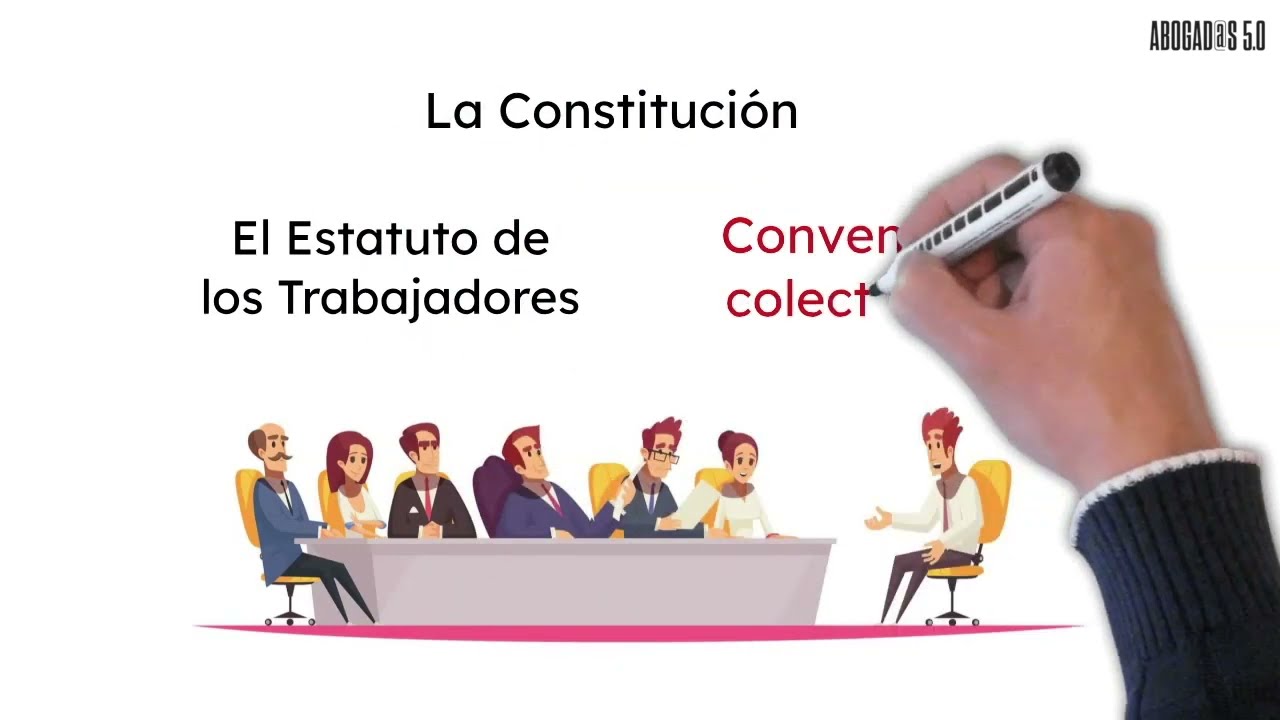
- Qué es: Un convenio colectivo es un acuerdo entre empleadores y representantes de los trabajadores.
- Cuánto cobras: Las condiciones, cantidades y plazos dependen del convenio aplicable y de su texto vigente.
- Cómo reclamar: Identifica el convenio en el registro oficial del país y conserva el documento y sus anexos.
Un convenio colectivo es el acuerdo negotiated entre employers and worker representatives to establish labour conditions for a defined group. The number 370/71 poses the central legal problem: it does not identify, by itself, a single universal instrument. The same reference can point to different collective agreements, depend on the sector, and have different effects in each country.
Qué es un convenio colectivo de trabajo
A collective agreement sets minimum or specific conditions for workers within a defined scope. It may regulate wages, working hours, leave, occupational safety, benefits, discipline, or the procedure for resolving conflicts. Its legal force depends on the country and the subject matter: some matters are fixed by law, while others can be improved through collective negotiation.
Searching for “convenio colectivo de trabajo 370 71” creates an identification problem rather than immediately producing a single answer. The reference may use “370/71” as an internal number, omit the sector, confuse a collective agreement with an agreement reached before a conflict, or point to a document that has been replaced or extended. The sensible approach is to verify three separate elements: the issuing or registration body, the parties and sector, and the date from which the instrument applies.
In the countries analysed here, the same basic structure appears, but the legal route does not: the State can publish and register a convention, delegate that function to another body, or require registration and approval before it applies.
El principio común y por qué cambia por país
The shared principle is that collective bargaining allows worker and employer representatives to agree on employment conditions for an identifiable group. The purpose is to establish rules that apply collectively, often improving on statutory minimums where national legislation permits it.
Everything else changes by country. In Spain, the framework includes the Estatuto de los Trabajadores and collective agreements are registered and deposited through the State’s electronic system. In Mexico, the Ley Federal del Trabajo and the federal labour authorities provide the framework for collective bargaining and its registration. In Argentina, collective agreements are connected with the Ley 14250 sobre Convenios Colectivos de Trabajo and the administrative labour system. In Chile, the relevant starting point is the Código del Trabajo and its rules for collective negotiation, supervised by the Dirección del Trabajo. In Peru, the framework is the Decreto Legislativo 728 and its consolidated text, with oversight through the Ministry of Employment and the labour inspection system.
Therefore, the number 370/71 must be checked in the country where the work is performed. A Spanish convention cannot be applied automatically in Mexico, Argentina, Chile or Peru, nor can a salary or deadline be moved from one legal system to another.
España: dónde se busca el convenio 370/71
In Spain, the reference should be located through the State’s collective agreement publication and registration system, commonly called the REGCON system. The Real Decreto 713/2010 on registration and deposit of collective agreements provides the relevant regulatory framework. A search for 370/71 should therefore be treated as a starting point rather than proof of identity.
The reader should identify the employer’s activity, the applicable autonomous or state-wide scope, and the workers’ occupation. A maritime agreement, for example, does not govern unrelated workers merely because its number resembles another instrument. The official consultation should show the full title, the represented parties, the territorial and personal scope, the effective date, and any extension, denunciation or replacement information.
The BOE and REGCON are the first places to check. The Inspección de Trabajo and the applicable courts of social jurisdiction may later matter for compliance or disputes, but they do not replace the text of the collective agreement.
La norma y el organismo aplicables en España
The basic labour rule in Spain is the Estatuto de los Trabajadores, while the Real Decreto 713/2010 governs registration and deposit. The Commission Consultiva Nacional de Convenios Colectivos also has a relevant institutional role under the Real Decreto 1362/2012. These are state-level rules; a collective agreement may then reflect an autonomous sectoral agreement.
For 370/71, the verifiable elements are its exact title, registration data, scope, signature date, publication record and current status. The employer or worker must also check whether a subsequent agreement replaced it, extended it or modified the represented group. If the State consultation does not return a matching document, the number should not be treated as identifying a valid Spanish convention without further evidence.
Cómo revisar un convenio colectivo en España
- Search the REGCON publication and registration system using 370/71, then repeat the search with the complete title and activity of the employer.
- Check the collective agreement against the Real Decreto 713/2010: identify the parties, the geographical scope, the personal scope and the effective date.
- Read the clauses on duration and denunciation, then inspect the official record for extensions, denunciations or replacement agreements.
- Compare the resulting text with the collective agreement incorporated in the applicable collective agreement and with the rules of the Estatuto de los Trabajadores.
- If a dispute concerns compliance in Spain, preserve the official document and seek assistance from the Inspección de Trabajo; judicial claims follow the labour jurisdiction rules.
The key point is that the State publication is evidence of the text and registration, while applicability to a particular employer still depends on the activity and scope.
Ejemplo de lectura de un convenio español
Suppose an employer operates in maritime transport and presents a document marked 370/71. The document says it applies to “master and officers of merchant vessels” and states an effective date in the body. The reader checks the State registration record, the parties, and the publication reference. If the official record shows a different agreement or an expired scope, the number alone cannot be used to claim that the document applies.
If the text provides a supplementary allowance but does not state an amount, the reader cannot calculate the payment from the number alone. The formula is: applicable collective allowance plus any amount fixed by national law or another valid instrument, without inventing an amount for the Spanish case.
Número 370/71
Sector, territorio y trabajadores cubiertos
Fecha de entrada en vigor, prórroga y reemplazamiento
El número por sí solo no determina derechos ni obligaciones
| Check | Spain | Practical meaning |
|---|---|---|
| First legal source | REGCON and the BOE | Confirm the official text and registration |
| Scope | Activity, territory and workers | Decide whether the agreement covers the employment relationship |
| Time | Effective date and extensions | Determine whether the obligation remains in force |
México: dónde se busca el convenio 370/71
In Mexico, the starting point is the Ley Federal del Trabajo and the federal labour administration. The reference 370/71 must be connected to the sector, the employer’s activity and the relevant parties. Mexico has a registration and consultation system for collective agreements, but the number should not be presumed to correspond to a particular sector or territory.
For a worker in Mexico, the practical route is to ask the employer for the collective agreement and its registration information, then compare those details with the official consultation. The Secretaría del Trabajo y Previsión Social is relevant for labour inspection and information. The Instituto Mexicano del Seguro Social governs social-security coverage and does not decide whether a collective agreement applies to a dismissal.
If there is a dispute about dismissal in Mexico, the Centro Federal de Conciliación y Registro Laboral administers the mandatory pre-litigation conciliation stage for matters within its competence. That procedure does not replace the need to identify the correct collective agreement.
La norma y el organismo aplicables en México
In Mexico, the Ley Federal del Trabajo establishes the general framework for collective bargaining. Federal law distinguishes matters reserved to legislation, matters that may be agreed collectively and matters that may improve statutory conditions through collective agreement.
The STPS is the federal authority to consult for labour matters, and its Procuraduría de la Defensa del Trabajo provides free advice and representation to workers in cases within its competence. For 370/71, the reader needs the full agreement title, registration data, parties, sector, territorial scope and duration. No amount or deadline can be attributed to Mexico unless it appears in the identified instrument.
Cómo revisar un convenio colectivo en México
- Request from the employer in Mexico the complete collective agreement, its annexes, and the registration data.
- Search the official labour information channels using the full title and the number 370/71; do not rely on an unlinked commercial summary.
- Check the scope: economic activity, state or multi-state territory, occupation and included employers.
- Check the effective date, duration, extension and denunciation clauses, then identify any later agreement that replaced or modified it.
- For a dismissal dispute in Mexico, begin with the Centro Federal de Conciliación y Registro Laboral; do not assume that a former labour board accepts new claims.
If the document cannot be matched to an official record, the appropriate conclusion is that the instrument has not been identified, not that the employee is left without protections.
Ejemplo de lectura de un convenio mexicano
Karla works in Monterrey, Mexico, and receives a document marked 370/71. The document applies to “employees in the transport sector” and contains a formula for an additional payment, but no amount. The check in Mexico shows that the agreement is registered for a different activity. Therefore, its formula cannot be transferred to Karla’s employer.
The calculation must instead use the applicable Mexican collective agreement or statutory rule. If the valid instrument says “one daily base salary for each extra hour”, the formula is: applicable daily base salary × extra hours. The daily base must be identified from the valid Mexican source; no amount should be invented from the number 370/71.
Argentina: dónde se busca el convenio 370/71
In Argentina, collective agreements are connected with the Ley 14250 sobre Convenios Colectivos de Trabajo and the administrative registration system of the Ministry of Labour. A reference such as 370/71 should be searched through InfoLEG, the official legal-information system, using the complete title and the responsible parties.
The number may relate to an older or sector-specific agreement. For example, the available material includes resolutions and collective agreements involving maritime workers and port towage. Their numbers, such as 620/2011 or 682/2014, show why a partial or outdated reference cannot identify the legal regime by itself.
For a worker in Argentina, the collective agreement must be checked for its registered text, the parties, the activity, the geographic scope and the duration. The Ministry of Labour, Employment and Social Security is the central reference for administrative verification. For a dismissal dispute in Argentina, the applicable conciliation route is the SECLO in the City of Buenos Aires, where the competent jurisdiction applies; the text of the agreement remains the starting point.
La norma y el organismo aplicables en Argentina
In Argentina, the Ley 14250 is the principal reference for collective agreements. The Ley 24185 sobre Convenciones Colectivas de Trabajo also belongs to the Argentine collective-labour framework. The Ministerio de Trabajo, Empleo y Seguridad Social is the central administrative authority for the sectoral registration system.
A collective agreement must normally be registered with the competent administrative authority to apply to the workers it covers. For 370/71, the reader should verify whether the number matches an official resolution or registered text, and then check whether the agreement was subsequently replaced, extended or denounced.
Cómo revisar un convenio colectivo en Argentina
- Search InfoLEG for 370/71, then repeat the search using the agreement title, sector and parties.
- Open the registration or homologation record and verify the date, administrative authority, parties, activity and territorial scope.
- Read the duration clause and identify any complaint, denunciation, extension or replacement recorded in Argentina.
- Check whether a later convention contains the applicable clause; for maritime work, compare sector-specific rules rather than transferring the terms of another Argentine agreement.
- If there is a dismissal dispute in Argentina, follow the applicable conciliation route in the SECLO in CABA where applicable, and then the labour justice process.
The source to retain is the official Argentine record, not a reposting of an old PDF.
Ejemplo de lectura de un convenio argentino
The official Argentine record for a collective agreement registered as 620/2011 covers maritime personnel in tankers, support vessels and offshore craft of Argentine flag. It states a two-year duration from 1 May 2010, annual extension unless denounced with 30 calendar days’ notice, and a minimum 72-hour notice for crew changes.
The calculation for a relevant additional payment must use the agreement’s own base and percentage. If the applicable clause establishes an additional equal to 15% of the identified base, the calculation is: identified base × 15%. The base must come from the Argentine instrument; the number 370/71 cannot supply it.
▲ Comparación necesaria: coincide el número, pero no confirma sector, alcance ni vigencia.
Chile: dónde se busca el convenio 370/71
In Chile, the Código del Trabajo and the Dirección del Trabajo provide the national framework. The reference 370/71 should be checked in the official legal-information system and against the registry maintained by the labour authority. It should not be assumed to be a national agreement: many collective instruments operate within a company, an economic activity, a territorial area or a specific group of workers.
The reader should identify the title, the parties, the sector, the covered employees and the date of the agreement. The Dirección del Trabajo can also mediate and enforce applicable labour rules. If the dispute reaches court in Chile, it follows the labour jurisdiction, but the collective agreement must first be correctly identified.
La norma y el organismo aplicables en Chile
In Chile, the Código del Trabajo governs collective bargaining and the legal effects of collective agreements. The Dirección del Trabajo is the competent national authority for inspection and mediation within its legal powers.
The number 370/71 has no independent universal meaning in Chile. The legal question is whether it corresponds to a registered collective agreement and whether the parties and scope match the employment relationship. Any percentage, deadline or payment must be taken from the identified Chilean text, not from a convention with a similar number elsewhere.
Cómo revisar un convenio colectivo en Chile
- Search the Chilean legal-information system using 370/71, the sector and the full title.
- Check whether the text is a collective agreement, an individual agreement or another labour instrument.
- Identify the parties, activity, territory, occupation and effective date in Chile.
- Review the duration and any renewal, termination or replacement information, then compare later agreements in the same registry.
- If compliance is disputed in Chile, use the Dirección del Trabajo; if litigation is required, follow the route of the Juzgados de Letras del Trabajo.
Ejemplo de lectura de un convenio chileno
Suppose a Chilean worker receives a document marked 370/71 with the title “agreement for a transport activity”. If the registry shows that the document belongs to one company, the worker cannot use it for an unrelated employer merely because the activity names resemble each other.
If the valid Chilean agreement provides a percentage over a base, the calculation is: identified base × stated percentage. The base, percentage and currency must come from that agreement. No amount should be inferred from the reference number.
Perú: dónde se busca el convenio 370/71
In Peru, the reference 370/71 should be sought in the official catalogue of collective agreements and in the institutional records of the Ministry of Employment. The Decreto Legislativo 728 and its consolidated text, the Ley de Productividad y Competitividad Laboral, provide the national labour framework for private employment.
La misma referencia puede designar instrumentos distintos según el país, el sector, el periodo y el registro consultado.
The reader should check whether the number refers to a registered agreement, its sector, the parties, its territorial scope and its duration. The Ministry of Employment and the SUNAFIL inspection system are relevant for verification and enforcement within their respective competences. The official Peruvian sources are El Peruano and the government portal; the catalogue must be distinguished from a general news report or a private database.
For a dispute in Peru, the labour route is governed by the New Procedural Labour Law and the competent labour courts. Before litigation, the worker should establish which collective agreement applies and whether it was validly registered and remains effective.
La norma y el organismo aplicables en Perú
In Peru, the Decreto Legislativo 728 regulates the employment relationship and collective negotiation. The Ley 25222 on organisations representing second-degree workers concerns participation in collective negotiation by the branch of economic activity.
The Ministry of Employment and the SUNAFIL inspection system are the relevant national authorities for checking and enforcing labour rules in Peru. For 370/71, the reader must obtain the full title, registration data, parties, scope and validity from the official record. The number alone does not establish an obligation or a monetary entitlement.
Cómo revisar un convenio colectivo en Perú
- Search the official catalogue for 370/71, then use the complete title, activity and parties.
- Confirm that the document is registered in Peru and identify the issuing or registering authority.
- Check the economic sector, territorial scope, occupations covered and effective date.
- Review the expiry or extension clause and look for a later agreement that replaces or modifies the text.
- For an enforcement issue in Peru, use SUNAFIL within its competence; for a judicial claim, follow the procedure of the competent labour court.
Ejemplo de lectura de un convenio peruano
A worker in Lima, Peru, presents a document marked 370/71. Its annex contains an additional-payment formula but not the base. The official Peruvian search must establish whether the document covers the worker’s activity and territory.
If the valid agreement states that the additional amount is a fixed multiple of the daily wage, the calculation is: applicable daily wage × agreed multiple. The applicable daily wage in Peru must be verified from the valid collective agreement or the relevant official source. If the document does not supply the figures, no amount can be responsibly calculated.
| Identificación correcta | Texto oficial localizado | |
|---|---|---|
| Alcance compatible con la relación laboral | ✔ | ✕ |
| Vigencia y versión aplicables | ✕ | ✔ |
| Obligaciones y derechos extraídos del texto | Referencia numérica suficiente | ✔ |
| Country | Where to start | What must be matched | What cannot be inferred |
|---|---|---|---|
| Spain | REGCON and the BOE | Activity, parties, scope and validity | A right from the number alone |
| Mexico | STPS and the federal labour information system | Sector, registered text and covered workers | A payment without the base |
| Argentina | InfoLEG and the Ministry of Labour | Registration, activity and duration | The effects of a similar maritime convention |
| Chile | BCN/Chileche and the Dirección del Trabajo | Company or sector and effective scope | A company agreement for all workers |
| Peru | El Peruano and the Ministry of Employment | Registration, branch, territory and duration | A monetary amount from the reference number |
The safest legal conclusion about “370/71” is not that it is valid or invalid, but that it has not yet been identified. The official country record, the scope and the current version determine the answer.
Data checked in October 2026.
Preguntas frecuentes
1. ¿Qué establece el artículo 371 de la Ley Federal del Trabajo?
En México, el artículo 371 de la Ley Federal del Trabajo regula la negociación del contrato colectivo de trabajo entre una organización sindical y una empresa. El acuerdo debe celebrarse por escrito, contener las cláusulas obligatorias y可以是 revisado durante su vigencia mediante los procedimientos previstos en la ley. LaSecretaría del Trabajo y Previsión Social supervisa el cumplimiento de las obligaciones pactadas.
2. ¿Qué es un contrato colectivo de trabajo?
En México, un contrato colectivo de trabajo es el acuerdo escrito entre una organización sindical y un patrón sobre las condiciones laborales que se aplicarán a los trabajadoresGBTL del grupo representado. Puede abarcar una empresa, un establishment o un ramo de actividad, y debe observar las disposiones de la Ley Federal del Trabajo. Su vigilancia corresponde a la Secretaría del Trabajo y Previsión Social.
3. ¿Cómo se revisa un contrato colectivo de trabajo?
En México, la revisión de un contrato colectivo puede solicitarse por la propia organización sindical, por la empresa o cuando seHay cambios Fiesta en las condiciones de trabajo o en la situación del sector. El asunto se tramita ante la Secretaría del Trabajo y Previsión Social, que puede convocar a las partes y verificar la información presentada. Las modificaciones deben formalizarse conforme a la ley y publicarse para que resulten exigibles.
4. ¿Qué es un sindicato en México?
En México, un sindicato es una organización de trabajadores constituida para representar a sus miembros en las relaciones laborales y defender sus derechos. PuedeMazatlanarse de sección sindical,分支nica o gremial, según su estructura y actividad, y se registra ante la Secretaría del Trabajo y Previsión Social. Su representación permite negociar un contrato colectivo de trabajo con la empresa correspondiente.
5. ¿Cómo funciona un contrato colectivo de trabajo en una empresa privada?
En México, una empresa privada puede celebrar un contrato colectivo con la organización sindical que represente a sus trabajadores. El documento fija obligaciones sobre salarios, jornada, condiciones de seguridad, servicios y demás aspectos permitidos por la Ley Federal del Trabajo. La Secretaría del Trabajo y Previsión Social es la autoridad encargada de vigilar su aplicación y solicitar ajustes cuando sea necesario.
6. ¿Qué estructura debe tener un contrato colectivo de trabajo?
En México, el contrato colectivo debe contener, entre otros elementos, los datos de la empresa y de la organización sindical, el ámbito de aplicación, las condiciones de trabajo y las cláusulas obligatorias previstas en la Ley Federal del Trabajo. Según lo dispuesto en su artículo 391, debe incluir también las签名 y formalidades exigidas para su validez. La autoridad competente puede revisar el documento y requerir correcciones si no cumple la ley.
Fuentes
- ArgentinaDisposición 61/2011 – CONVENCIONES COLECTIVAS DE TRABAJOconsultado el 29/10/2026
- Sunarphttps://www.sunarp.gob.pe/viewdocument.asp?RutaFil…consultado el 29/10/2026
- LaleyPortal de Revistas – Lista de Resultados – Aranzadiconsultado el 29/10/2026
- Santafe[PDF] convenio colectivo – Gobierno de Santa Feconsultado el 29/10/2026
- Pjhttps://www.pj.gob.pe/wps/wcm/connect/CorteSuprema…consultado el 29/10/2026