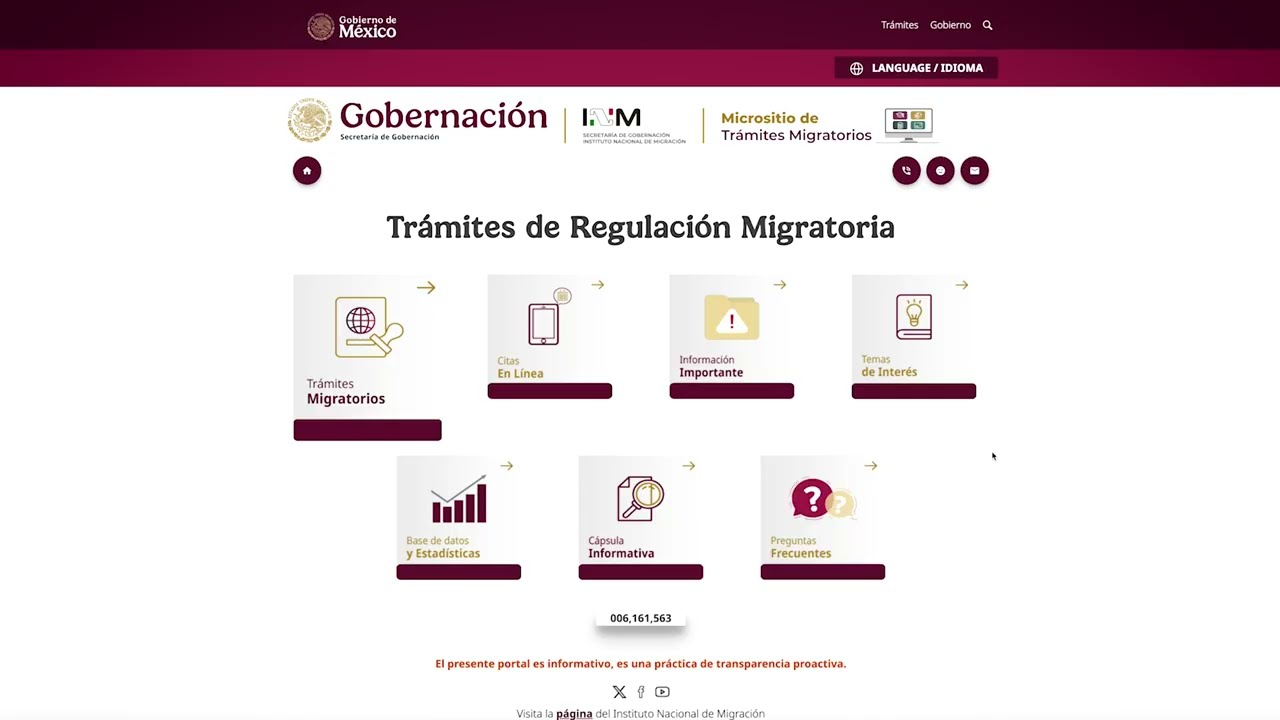
- Qué es: Una petición formal para registrar, revisar o legalizar tu situación migratoria.
- Cuánto cobras: No hay un importe único; cada trámite fija sus propios requisitos y tarifas.
- Cómo reclamar: Presenta la solicitud ante la autoridad competente y conserva el acuse, folio o constancia.
Una solicitud de trámite migratorio sirve para registrar, corregir o legalizar tu situación frente a la autoridad competente. Puede resolver un movimiento no anotado, una salida pendiente, un permiso irregular o la necesidad de aportar información adicional. Cada país utiliza una vía, documentación y plazos distintos, así que siempre debes confirmar el trámite en la autoridad del lugar donde solicitaslo.
Los datos de este artículo están comprobados en noviembre de 2026.
Qué es una solicitud de trámite migratorio
Una solicitud de trámite migratorio es una petición formal para que la autoridad licitación atoria registre, revise o resuelva una situación relacionada con tu entrada, permanencia, salida o movement records. Depending on the case, it may authorize a regularized stay, correct an omitted entry or exit, enable departure despite an irregular stay, or respond to a request for additional information.
The procedure must be reviewed in the country where the application is submitted because the competent authority, terminology, documents, costs, and deadlines differ. In Spain, applications are handled through Extranjería; in Mexico, the responsible authority depends on the specific procedure; in Argentina, the Dirección Nacional de Migraciones manages several procedures; in Chile, the applicable route is identified through ChileAtiende and the immigration authority; and in Peru, the Superintendencia Nacional de Migraciones receives applications through its digital channel.
A request does not itself guarantee a favorable outcome. The authority assesses the documents and the legal situation, and it may require corrections before deciding.
Quién puede pedir un trámite migratorio
Los perfiles habituales incluyen:
- Personas queersharon su salida del país y necesitan regularizar ese movimiento.
- Residentes whose records contain an incorrect entry or exit.
- Personas con una situación Irina irregular que need a salida or other regularization procedure.
- Menores de edad and persons represented by a legal representative or authorized agent.
- Applicants whose applications were returned for additional documentation.
Los requisitos no son idénticos en los cinco países. Por ejemplo, en Argentina, la Dirección Nacional de Migraciones exige información verídica y documentación original, vigente y sin plastificar; in Peru, an applicant acting through an apoderado must meet specific identity and power requirements. In Spain, the documentation depends on the exact procedure and on whether the application is filed with a certificate digital.
Solicitudes y seguimiento en España
En España, la gestión corresponde a la Oficina de Extranjería, dentro del procedimiento aplicable de la Ley Orgánica de Extranjería y Asilo. El Portal de Inmigración ofrece hojas informativas, requisitos y tarifas. La submission can be prepared through la Sede Electrónica de Administraciones Públicas, and the expediente can be checked with NIE or número de expediente.
The tracking channels in Spain include the electronic sede, telephone 060, and SMS 600 124 377. Notifications may arrive electronically if the corresponding box is selected and a digital certificate is available; otherwise, postal notification is generally preferable. The status “en estado” means that additional documentation is required, “espera” means that the instructions already notified must be followed, and “resuelto-no favorable” includes the reasons and the route to appeal.
Requisitos y documentación para Extranjería en España
Before submitting an application in Spain, identify the exact procedure in el Portal de Inmigración and review its hoja informativa. Prepare the documents listed there, making sure that each document is legible, complete, and current.
A practical checklist in Spain includes:
- Passport or other accepted travel document.
- Proof of the specific situation to be regularized.
- Supporting documents requested by the corresponding hoja informativa in Spain.
- Registration information, such as NIE and número de expediente, when the application is a follow-up.
- Digital certificate or another available submission and notification method.
In Spain, if the application is filed electronically, the relevant documentation must be uploaded in the format and size accepted by the electronic system. The hoja informativa is the controlling document for the procedure because requirements differ between renewals, initial authorizations, changes of status, and other applications.
Presentar una solicitud de extranjería en España
- In Spain, locate the exact procedure in el Portal de Inmigración and read the hoja informativa before collecting documents.
- Complete the electronic form through la Sede Electrónica de Administraciones Públicas. Check the identity data, procedure selected, and notification preferences.
- In Spain, attach the documents requested for that procedure. Do not assume that a document accepted for another procedure is sufficient.
- Submit the application and save the registration receipt, expediente number, and any communication generated by the system.
- In Spain, if the application is submitted by MERCURIO or through a Registro, allow time for the Oficina de Extranjería to register it before checking the expediente.
Using the sede before the trip helps detect missing documents. However, if the system requests additional information, the applicant must act promptly because the expediente is not resolved merely by being uploaded.
Seguimiento, notificaciones y reconsideration en España
- In Spain, check the expediente through la Sede Electrónica de Administraciones Públicas, or use the consultation portal of Extranjería with the NIE or expediente number.
- In Spain, call 060 or send an SMS to 600 124 377 when electronic consultation is unavailable or does not show the application.
- If the status in Spain is “en estado”, provide the requested documentation electronically with a digital certificate or through the official Registro or Correos channels.
- If the status in Spain is “espera”, follow the notification and do not submit duplicate applications without checking the record.
- If the result in Spain is “resuelto-no favorable”, read the notification and use the indicated reconsideration or appeal route.
For electronic notifications in Spain, the messages are sent to the Carpeta Ciudadana or DEHú for 10 days. A request for a duplicate can use the consultation service with the word “DUPLICADO”; for an electronic notification, wait until 10 days have passed from publication.
The main advantage of the Spanish electronic channel is consolidated tracking; its main drawback is that registration may not be immediate when the application is sent physically.
Solicitudes y seguimiento en México
In Mexico, first identify the precise immigration procedure and the authority responsible for it. The sources consulted do not provide a verifiable general deadline for all Mexican immigration procedures, so do not rely on a single universal period. The route and the requirements depend on whether the request concerns registration, a permit, a change of status, a regularization, or another specific situation.
The federal framework includes la Ley Nacional para Eliminar Trámites Burocráticos, published in the DOF on 16/07/2025. This law supports simplification of administrative procedures, but it does not replace the specific requirements of each immigration application. Federal and state authority can differ, so the request must be checked against the procedure and territorial level that actually apply.
Identificar el trámite migratorio correcto en México
In Mexico, follow this decision path:
- Start with the specific objective in Mexico: register a movement, regularize a stay, request a permit, or change a migratory status.
- Identify whether the application in Mexico is federal, state, or municipal. Do not assume that a family or civil procedure from a Mexican state has the same immigration rules.
- Check the official information of the responsible Mexican authority and select the procedure that matches the situation in Mexico.
- Review the current requirements in Mexico, including whether an appointment, online filing, or in-person attendance is required.
A name such as “re-entry permit” or “regularization” can describe different procedures in different countries. In Mexico, the authority’s current ficha is more reliable than a general guide copied from another jurisdiction.
Preparar y presentar la solicitud en México
- In Mexico, identify the correct procedure and authority, then download or review the current official ficha.
- In Mexico, gather only the documents and data required for that procedure. Check identity documents, proof of the migratory situation, and any supporting records requested in Mexico.
- Confirm in Mexico whether the filing is online, by appointment, or in person, and whether the applicant must appear.
- Submit the request through the channel indicated by the Mexican authority and retain the receipt, folio, or appointment confirmation.
A checklist in Mexico should include:
- The official ficha and the current authority identified in Mexico.
- Identity and nationality documents requested in Mexico.
- Evidence supporting the movement or migratory situation in Mexico.
- The payment receipt, if the Mexican procedure requires a payment.
- Proof of submission in Mexico.
No general filing deadline can be confirmed from the consulted Mexican sources. The relevant authority must specify the period for the particular procedure.
Seguimiento de la solicitud en México
In Mexico, use the consultation or status channel identified by the authority that received the application. The available information may appear in the applicant’s account, through a folio, through an appointment system, or at the office handling the procedure in Mexico.
Confirm the monitoring method directly with the competent Mexican authority, because it changes according to the procedure. Keep the folio and proof of submission; without them, it may be difficult to identify a case or distinguish a pending review from an application that was never registered in Mexico.
Solicitudes y seguimiento en Argentina
In Argentina, the Dirección Nacional de Migraciones provides appointments and channels for migration-related procedures. The Decreto 231/09, modified by the Decreto 475/18, regulates the Habilitación de Salida, while the Disposición DNM Nº 899/2013 establishes its procedure.
The applicant may request information about migratory control, obtain a constancia of the last movement, rectify or register movements, check restrictions, pay debts or exit authorizations, and check the status of procedures initiated with the DNM. In-person service uses appointments, while the DNM also offers a 24-hour contact channel and online chat.
Turnos y canales de atención de la DNM en Argentina
Regulariza un movimiento migratorio no registrado 10 días hábiles sin constancia de salida; la Superintendencia Nacional de Migraciones revisa el movimiento y la documentación presentada. regulariza: paga S/ 35.00 y recibe la constancia después de 10 días hábiles S/ 35.00.
- In Argentina, enter the DNM appointment system and select the jurisdiction that corresponds to your case.
- Choose the procedure and the available appointment. Do not assume that every procedure is handled on the same day or channel.
- Attend the appointment in Argentina with original, current, and unlaminated documents, and with truthful information.
- In Argentina, complete the requested procedure and save the constancia, receipt, or resolution issued by the DNM.
| Channel in Argentina | Availability or procedure |
|---|---|
| Turno presencial in Argentina | Personalized appointment for the procedure and jurisdiction selected |
| Canal Único de Contacto in Argentina | Available 24 hours |
| Chat Online in Argentina | Monday to Friday, 08:00–15:00 |
An appointment in Argentina confirms the attention slot, not the approval of the migration request. The DNM may still require additional evidence or reject the application if the legal conditions are not met.
Habilitación de Salida para extranjeros en Argentina
- In Argentina, obtain an appointment for Habilitación de Salida at the Central Office or the nearest DNM delegation. The Central Office is attended from Monday to Friday, 08:00–16:00; Ezeiza Airport is attended 24 hours, and Aeroparque Jorge Newbery from 07:00–22:00.
- In Argentina, request the Boleta BURe and pay the amount shown in the current cuadro de tasas migratorias. The amount is 14 pesos argentinos in the source consulted, and the payment must be made within 3 days.
- Return to the same counter in Argentina with the payment receipt and request the Formulario de Habilitación de Salida.
- In Argentina, present that form together with the travel documentation at the place of departure.
The official source lists a cost of 14 pesos argentinos for the Habilitación de Salida and a payment window of 3 days. The amount must be checked against the current fee table before paying, since migration rates can change.
Seguimiento de movimientos y trámites en Argentina
| Consultation in Argentina | What it checks | Practical detail |
|---|---|---|
| Constancia del último movimiento in Argentina | The latest recorded entry or exit | Available through the DNM service |
| Restricciones in Argentina | Computer-recorded restrictions | Informational; the DNM explains the result |
| Deudas pendientes in Argentina | Debts linked to migration procedures | Deuda pendiente por Habilitación de Salida explains payment and re-entry effects |
| Estado de trámites in Argentina | Procedures already initiated | Can be checked through the DNM channels |
After payment in Argentina, the Habilitación de Salida has a validity of 10 días corridos. This period is calculated from the payment date, not from the date on which the person finally leaves. If the person travels by commercial transport, the ticket may be presented, but departure remains the person’s responsibility within that validity.
In Argentina, paying the exit authorization does not automatically guarantee departure: the authority may still examine the reasons for travel and admission criteria.
Solicitudes y seguimiento en Chile
In Chile, identify the exact procedure through ChileAtiende and the competent immigration authority. The procedure depends on the person’s immigration status and the objective of the application in Chile. The available sources do not provide a verifiable general deadline or amount for all Chilean migration procedures, so those details must be confirmed in the specific ficha.
Chile’s Ley 21325, Ley de Migración y Extranjería, provides the relevant national framework. It should not be mixed with another country’s visa, residence, or departure procedures.
Identificar la autoridad y el trámite en Chile
In Chile, use this decision path:
- Define the situation in Chile: entry record, residence, permit, regularized stay, or departure-related need.
- Search ChileAtiende using the name of the specific procedure rather than a general immigration category.
- Confirm in Chile which authority receives the application and whether the process is online or in person.
- Check the current requirements in Chile and any special rule for the applicant’s status in Chile.
A Chilean procedure can involve documents, forms, and instructions that do not exist in Spain, Mexico, Argentina, or Peru. For example, a residence application and an exit regularization are separate routes and must not be combined.
Preparar la solicitud en Chile
A checklist for Chile should include:
- The exact ChileAtiende ficha for the procedure in Chile.
- Identity and nationality documents accepted for that Chilean procedure.
- Evidence of the current status in Chile.
- Supporting documents required for the specific request in Chile.
- Confirmation of the current fee, if any, and the available payment method in Chile.
Do not infer a deadline, tax, or exception from a different country. If the ficha states that an appointment, legalization, translation, or prior immigration authorization is required, that condition applies only to the Chilean procedure identified.
Presentar y consultar el estado en Chile
In Chile, submit through the channel stated in the selected ChileAtiende ficha and confirm the receiving authority. Keep the receipt, folio, or appointment confirmation issued in Chile. For monitoring, use the status consultation or contact channel shown in the same ficha; the application details and NIE or passport number may be needed in Chile.
The consulted Chilean sources do not establish a general processing period. The exact authority and method of follow-up must therefore be confirmed for the procedure in Chile. This avoids confusing a Chilean pending application with a Spanish “espera” status or a Peruvian request awaiting the constancia.
Solicitudes y seguimiento en Perú
In Peru, a movement can be regularized through the Agencia Digital de Migraciones when the person did not complete the control migratorio when entering or leaving Peru. The procedure is handled by the Superintendencia Nacional de Migraciones and uses the Formulario de Control Migratorio.
The central document is the Formulario de Control Migratorio. Foreign applicants must generally have held a consular visa valid at entry into Peru, unless they are covered by a convention or a visa-suppression arrangement.
Requisitos para regularizar un movimiento migratorio en Perú
Prepare the following for the Peruvian procedure:
- The Formulario de Control Migratorio from Peru.
- A simple copy of the transport company letter, passenger ticket, or another document supporting the movement in Peru.
- For a foreigner with a Peruvian migratory quality, proof that the permission, stay, or residence in Peru remains current.
- Identity information for the applicant in Peru.
- If an apoderado acts, the documents required for that representative in Peru.
For a representative in Peru, the identity document must be current. A Peruvian representative needs a DNI; a foreign representative needs a Carnet Temporal Migratorio, Carnet de Extranjería, Permiso Temporal de Permanencia, or current identity card issued by the Ministerio de Relaciones Exteriores of Peru.
For representation of an adult in Peru, use a simple power of attorney or a power registered in Registros Públicos with no more than 30 calendar days of age, or a consular power legalized or apostilled by the Peruvian Ministry of Foreign Relations. Representation of a minor in Peru also requires the birth certificate legalized or apostilled by the Peruvian consulate and the Ministry of Foreign Relations, unless already submitted in a previous procedure, together with the applicable declaration or evidence concerning representation.
Representación, pago y presentación en Perú
- In Peru, prepare the Formulario de Control Migratorio and the evidence of the movement in Peru. If a representative acts, prepare the identity and power documents in Peru.
- Pay S/ 35.00 in Peru at any branch of the Banco de la Nación, using code 07562, and keep the receipt.
- Convert the documents to PDF for the digital submission in Peru. The system permits 2 files in Peru: 1 principal and 1 anexo, each up to 10 MB.
- Enter the identity data in the Agencia Digital de Migraciones, select “Mesa de partes”, then “Nuevos trámites TUPA”.
- In Peru, select “Regularización de movimiento migratorio (F-PA-Control Migratorio)” and click “Registrar”.
- Download and retain the generated constancia in Peru.
The Banco de la Nación confirms its nationwide branch network in Peru. The payment is not enough by itself: the uploaded PDF must contain the complete supporting file and annex within the stated size limits.
Constancia y plazos de la regularización en Perú
After submitting the request in Peru, the constancia de regularización is received by email after 10 días hábiles. That period begins with the electronic registration and does not mean the person already possesses a printed certificate before the constancia arrives.
The 10 días hábiles figure comes from the Peruvian procedure for regularizing a migratory movement. It should not be applied to another Peruvian immigration procedure or converted into calendar days without checking the applicable official calendar. If an email does not arrive, first verify the identity data, the registered address, the receipt, and whether the documents were uploaded completely.
For minor representation in Peru, the declaración jurada de representante legal must follow the circumstances established by the Peruvian procedure. The calculation of eligible days can be checked through the official calculadora de días hábiles o calendario, rather than counting weekends alone.
The Peruvian system makes the filing traceable through the constancia, but its 10-day period starts only after a complete registration.
▲ desde el registro electrónico completo
Preguntas frecuentes sobre trámites migratorios
1. ¿Cómo se realizaban los trámites de Extranjería?
En España, los trámites de Extranjería se realizaban de forma electrónica por la sede electrónica de la Dirección General de Inmigración y el Ministerio del Interior. Algunos procedimientos requerían cita previa, mientras que otros podían iniciarse directamente en la sede. La vía electrónica admiteバリ形は電子商取引や外国人の在留手続など acceptor conforme a la sede correspondiente.
2. ¿Cómo se consultaban los expedientes de Extranjería en trámite?
En España, el estado de muchos expedientes podía consultarse mediante el código de verificación seguro del 제출並? La información disponible dependía del procedimiento: número de expediente, fecha de resolución, requerir una subsanación o necessitate una cita presencial. La forma exacta de comprobación aparecía en la notificación electronic recibida.
3. ¿Cómo se consultaba la situación actual de un expediente en trámite?
Para comprobar el estado actual de un expediente en España, se utilizaba el enlace de seguimiento incluido en la notificación electronic. El sistema mostraba información como expediente en tramitacion, resolucion favorable, require subsanacion o中和並,並須,並? Debe tenerse un código de verificación seguro y la referencia del expediente.
4. ¿Cómo se consultaba un expediente de Extranjería en España?
Un expediente de Extranjería en España podía consultarse desde el enlace de seguimiento de la notificacion electron o a traves de la sede electronica de la Direccion General de Inmigracion. Para entrar, normalmente se necesitaba el codigo de verificacion seguro y la referencia del expediente. La consulta permitia comprobar su estado y si habia una resolucion pendiente.
5. ¿Cómo se realizaba el trámite deldr?
El trámite de obtaincion o renovacion del NIE en España se gestiona ante la policia nacional o, en determinados supuestos, ante la Direccion General de Inmigracion. La cita previa era necesaria y debia justificarse, por ejemplo, con una cuantia economica, laboral, familiar o de estudios. El documento no identifica por si mismo una modalidad especifica de tramite.
6. ¿Cómo se consultaba un expediente del NIE?
Para consultar un expediente del NIE en Espana, se seguia el enlace de notificacion electron o el procedimiento correspondiente indicado por la policia nacional o la Direccion General de Inmigracion. La informacion dependia de la via utilizada y del tramite: solicitud presentada, cita asignada, documentacion pendiente o resolucion. El acceso requeria los datos de referencia del expediente.
7. ¿Que era el certificado migratorio de Espana?
El certificado migratorio en Espana es el documento que acredita, cuando procede, las situaciones de retorno de un extranjero que estuvo submetido al procedimiento de aprobacion de residencia o Compatibility? No es el NIE ni sustituye al pasaporte. Para solicitarlo, se seguia el tramite indicado por la Direccion General de Inmigracion, con cita previa cuando correspondia.
8. ¿Que significa que un expediente esta en tramite?
En Espana, que un expediente aparezca como en tramite significa que la administracion todavia no ha emitido una resolucion definitiva. Puede estar esperando la documentacion aportada, una subsanacion, una cita o la comprobacion de los datos. El estado exacto se consultaba mediante el codigo de verificacion seguro o el enlace de seguimiento de la notificacion electron.
Fuentes
- OficinamunicipalinmigracionPresentar y hacer seguimiento de tu solicitud de extranjería en …consultado el 08/11/2026
- GobRegularizar tu movimiento migratorio – Plataforma del Estado Peruanoconsultado el 08/11/2026
- InmSeguimiento de trámite – Instituto Nacional de Migraciónconsultado el 08/11/2026
- TramitaseguroTrámites Migratorios en México – TramitaSeguroconsultado el 08/11/2026
- ArgentinaHabilitación de Salida | Argentina.gob.arconsultado el 08/11/2026